


Glass vs. Aluminum: Choosing Your Spring Turkey Calling Surface

Updated: Mar 30
The sights and sounds of the Spring really creep up on us here in Texas. One week it can be cold and windy and the next its full of wildflowers, sunshine and mosquitos. And, after living here for over the last decade, I'll tell you that it's just how it goes. With this unpredictable weather, also comes days full of strutting longbeards looking for love across the region, and that's enough to get me out of bed on the dreariest of days. It probably goes without saying, but if you've turkey hunted with me, talked turkey hunting with me, or just eaten a turkey sandwich with me, you know how I feel about friction calls-- they're my all-time favorite to use to fool gobblers during this time of year. They're simplicity and versatility always make them the first calls that I grab out of my vest, regardless of whether i'm calling birds for a friend or hunting solo.
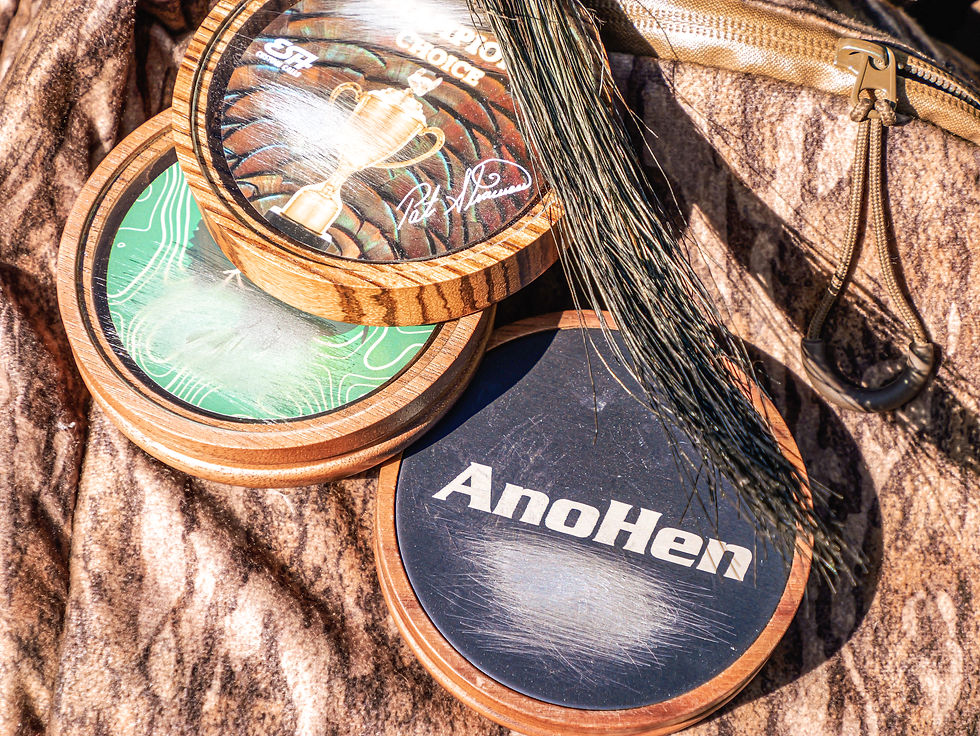
Over the course of my time in the spring turkey woods, I've used a bunch of different combinations of friction calls, based on myriad of factors. From a good old fashioned slate call, to crystal to glass and everything in between, I've called on them all. And trust me when I tell you that they all have pros and cons. Over the last several seasons here in Texas, I've really narrowed it down to two surfaces that really give me everything that I want. And, it's not to knock any of the other calling surfaces that I've absolutely used in the past, but between the terrain, calling distance and responsiveness of the birds in the brush country, glass and aluminum have worked wonders for me. With that said, both have earned a permanent spot in my vest for the majestic Texas Rio.
Here are the reasons why I always carry both.
Glass
On most days, the flexibility and surgical precision of a glass call is all I need from the time the sun comes up, deep into the late afternoon. To me, glass is just a super clean surface to work off of and it echos that cleanliness through it's tone. Now, when you first think about clean tones coming off of a turkey call, the first one that is likely to pop into your head is probably a long yelp. It's the backbone of the turkey woods and more than likely a favorite little part of everyone's calling sequence that we all throw in. But this wasn't what I was actually referring to, I'm talking about clean, soft clucks, which I normally start off the morning hunt with. I've found that on other surfaces other than glass, it takes a bit more effort based on the texture of the surface to mimic these soft sounds and they just don't come off the call sounding clean. Because glass is a so smooth, the amount of effort needed to pull the striker across the call is significantly less than some other calls. For me, this immediately gives it a huge advantage in the field.
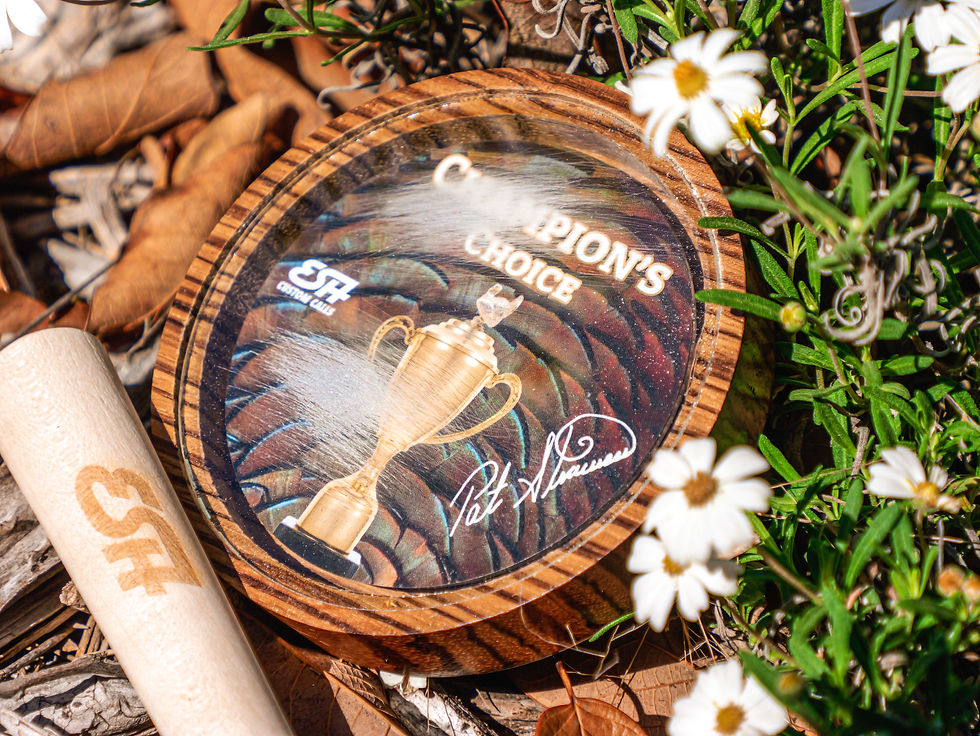
But soft, clean clucks and yelps aren't the only shining point of the glass call; to me it's the flexibility. You can literally go from crisp, clean cuts that connect across hundreds of yards of land and then also run really soft purrs at the drop of a hat. We've all been there; you've been working a bird for the greater part of the morning and he decides to hang up just outside of the red zone, what do you do? If you're not a comfortable mouth caller, switching to another call in your vest can be a complete wreck. Depending on the terrain between your position and that stubborn gobbler, changing to another call might just the be option that gets you busted, so that's a no-go. Fortunately, glass allows for softer, sweeter tones as well, so those super gentle putts, clucks and purrs are always at the ready when you have this call already deployed. This is precisely why glass sits pretty high on my list.
Aluminum

If glass is the surgical scalpel of the turkey woods, then an aluminum call is the circular saw, there, I said it. Anodized aluminum as a surface is a workhorse, a raw and heavyweight tool designed to battle under the toughest circumstances. And, when I say circumstances, I'm not just talking about weather, I'm referencing challenging terrain like those deep ridges ridges in the Northeast or vast drainages out West. This surface is can be pushed to its limits and will always sound incredible.
When I started running anodized aluminum as a calling surface, it was really just because I wanted something a bit more weatherproof on those tough days where the birds are hot, but the weather is trash. The moment glass gets a bit of moisture on it, it's game over. An aluminum call, paired with a carbon tipped striker however, could care less and is ready for battle. Truthfully though, I was naive when I first started calling on this surface, thinking that foul spring weather was one of the only reasons to carry this call. On a bright, dry spring day in the big, windy woods, this type of surface will give you all of the power you need to reach out and connect with that bird that's a long ways off. The sheer power that I can get when I push a striker over an aluminum call is pretty astonishing. Unlike glass that can be pushed too far, this surface just seems to handle it like a volume knob on a stereo. Need more power, just go for it and don't worry about the potential for a bad tone or ugly sounding sequence.
I would be remised if I didn't also mention the longevity of this call. Because aluminum is metal, the scratches and grooves that happen after conditioning your call will last significantly longer than most other surfaces out there. Usually, I take a Scotch-Brite pad or a really rough piece of sandpaper and scuff up this surface about once a season. Definitely not something that you would ever be able to get away with on slate, crystal or glass. The deep grooves that are able to be etched really help with the grit and heftiness of this call. It's a call that's always ready to roll.
Ultimately, choosing between glass and aluminum isn't about finding a winner—it’s about building a versatile toolkit that can handle the unpredictable nature of the spring. Whether I’m working a bird in the brush of South Texas or calling across a windy ridge in the Northeast, I’ve learned that being adaptable is what is most important.
If you’re looking to add a new friction call to your vest this season, think about the gaps in your current lineup. If you find yourself struggling to finish birds that are hung up just out of range, the surgical finesse of a glass surface might be your missing link. But, if you’re tired of your calls failing the moment the clouds roll in, or if you need the raw horsepower to reach a tom two drainages away, an anodized aluminum pot call is a workhorse that won’t let you down.
At the end of the day, the best call is the one that gives you the confidence to stay in the woods just a little bit longer. Grab a few different strikers, spend some time scuffing up those surfaces, and find the rhythm that sounds right to you.



Comments